The temperature needle on a GMC Sierra normally settles near the middle a few minutes after a cold start and stays there. A needle that keeps climbing toward hot and one that barely leaves cold look like opposite problems. Both can be thermostat failures, one stuck closed and one stuck open.
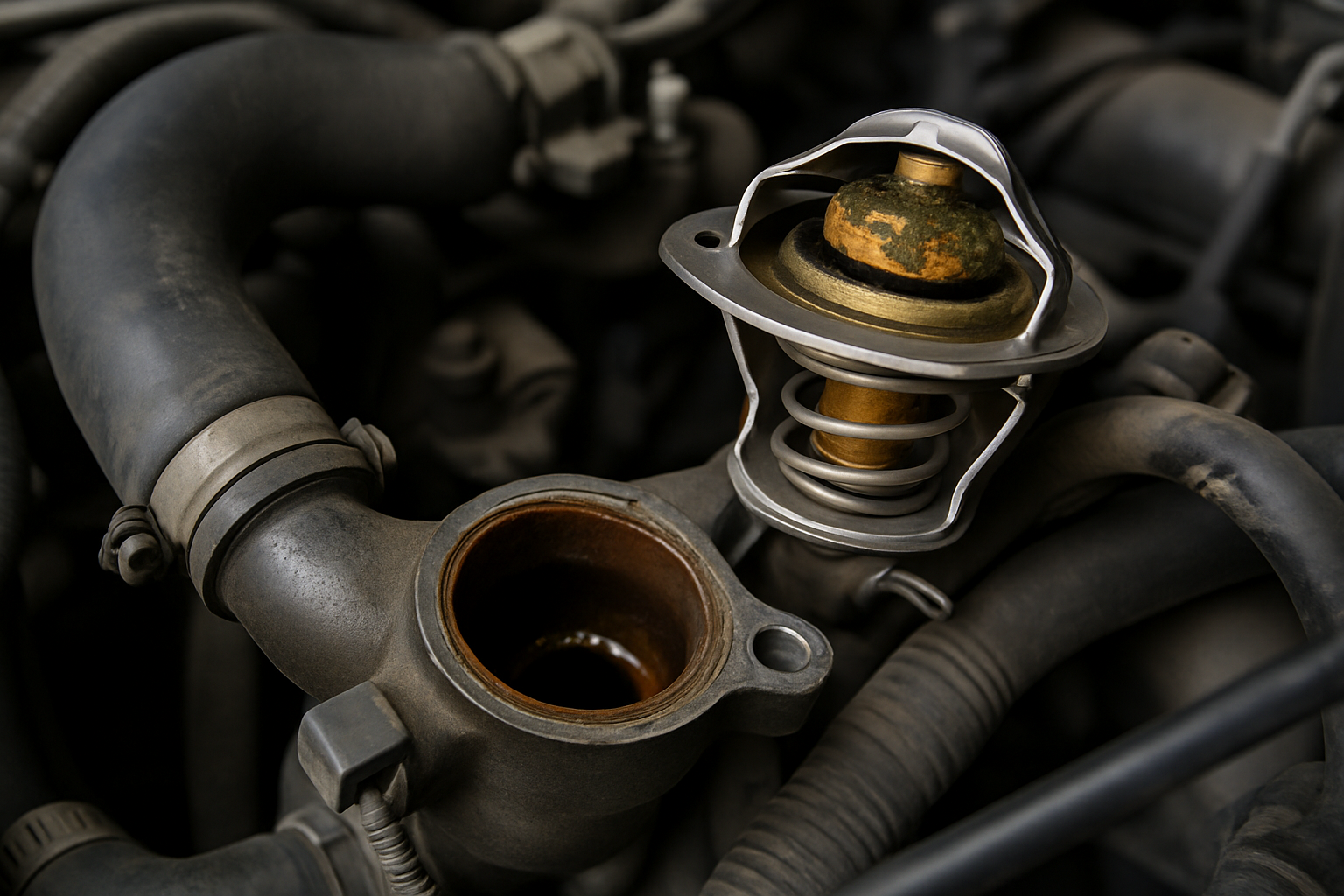
A thermostat is a heat-operated valve that stays shut while the engine warms up. Once the engine reaches its working temperature, it opens to send coolant out to the radiator. When the needle climbs, the risk falls on the engine itself, because an aluminum-head engine driven while it overheats can warp its cylinder heads.
A Needle Climbing Toward Hot
A thermostat stuck closed keeps coolant from reaching the radiator, so the gauge climbs toward the red. Coolant inside the engine keeps absorbing heat with nowhere to shed it. The gauge climbs whenever the engine runs, in traffic and on the open road alike. It is a steady climb, and it keeps going after the light turns green. If the gauge is climbing toward hot or you see steam, pull over, switch off the engine and have the truck towed.
A Needle That Stays Near Cold
A thermostat stuck open keeps the engine running cool, and the heater may blow lukewarm. Coolant flows straight out to the radiator right from a cold start, so the engine is slow to warm and runs cool. On a cold morning the needle barely lifts off the bottom. Warm air is slow to reach the vents, and the engine runs below its working temperature.
Running Hot With No Puddle
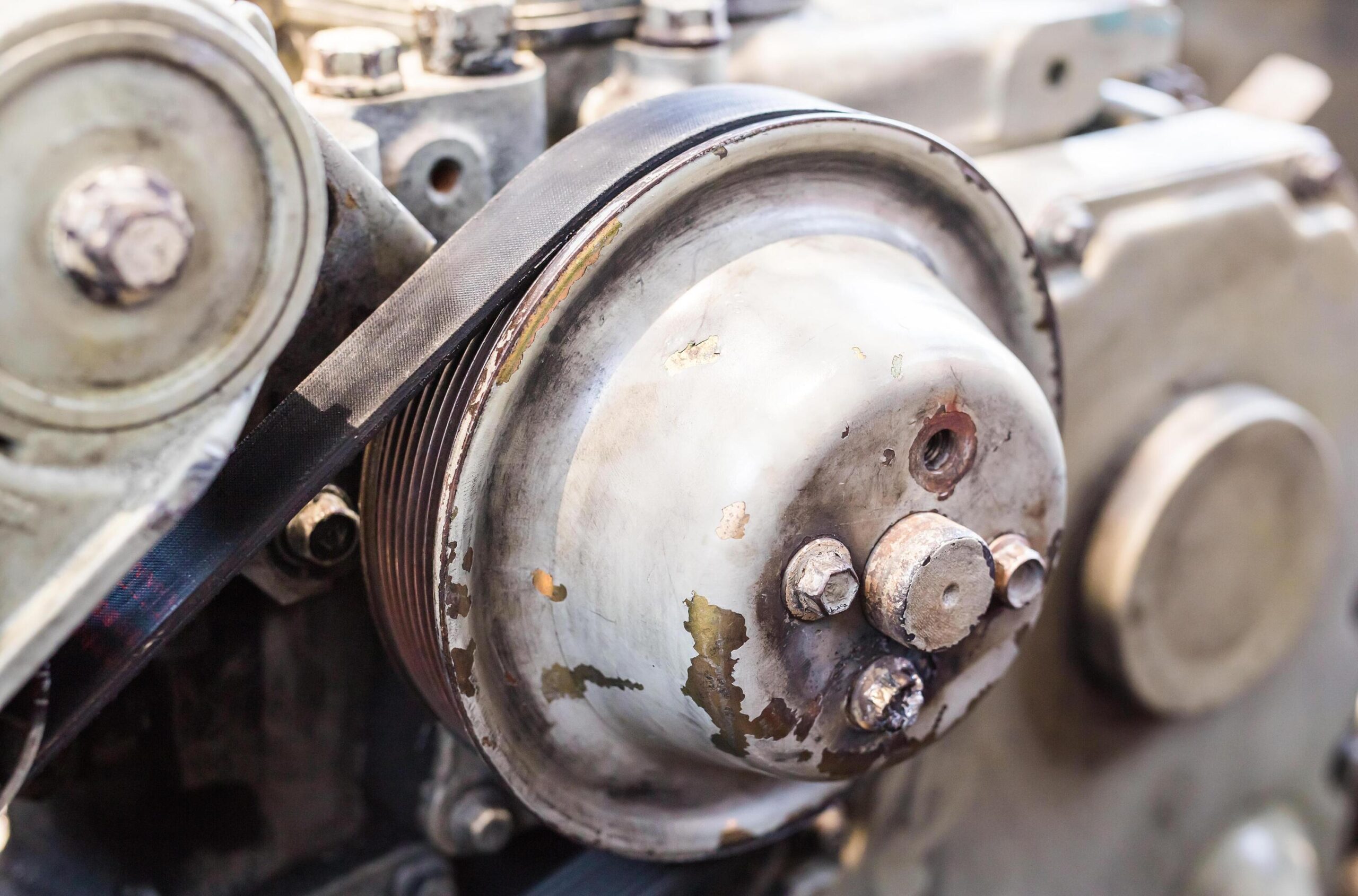
Sometimes the driveway stays dry and the Sierra still runs hot. If a housing or gasket fails, it can leave a coolant puddle under the front of the truck, so a dry driveway moves the search inside the cooling system. When a 2014-era Sierra runs hot with no coolant leak, we check four things: the coolant for combustion gas, how the thermostat operates, the water pump impeller and the coolant manifold. The water pump impeller is the set of vanes that pushes coolant through the engine.
An impeller that has stopped moving coolant leaves the same climbing needle as a thermostat stuck closed, so both sit on the list. Combustion gas in the coolant is a sign of a head gasket or a cracked head. On the 2014-2018 Sierra 1500 5.3L, when the gas test comes back clean and the thermostat fails to open, we replace the thermostat together with the housing that carries it.
Heat cycling is a separate problem on these trucks. When a thermostat keeps opening and closing, it heat-cycles the radiator hard, and that can crack radiator tubes at their headers. For that condition, the thermostat housing is replaced along with the radiator.
The Housing and the Refill
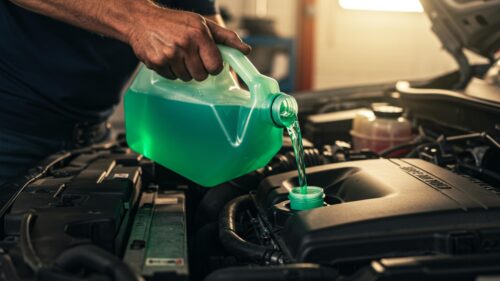
On the 2014-2018 Sierra 1500 5.3L, the replacement thermostat comes as one assembly with its housing and seal, and the assembly is replaced as a unit. Your estimate lists a housing for that reason. Older trucks differ: on the 2007-2013 Sierra 5.3, the thermostat sits in the water neck ahead of the water pump, a separate part from its housing. After the new part goes in, we refill the cooling system and bleed it to let the trapped air out, because trapped air can leave the engine running hot. An air pocket sitting at the thermostat keeps hot coolant from reaching it, so the needle can climb again on a brand new part.
On 2014-and-later Sierra 1500 trucks with the 6-speed automatic, a thermal bypass valve sits on the transmission cooler circuit, and it is a different part from the engine coolant thermostat. When the engine needle is the one climbing, the engine coolant thermostat is the part we test, and we replace it when the test supports it.
Sierra Cooling Repair for San Lorenzo Drivers
After the repair, your Sierra goes home with its cooling system refilled and bled of trapped air. Precision Auto Care works on trucks in San Leandro, including Sierras from San Lorenzo. Call (510) 351-8211 to set up a visit.